
STRUCTURAL CHANNEL
No items found.
Overview and Applications
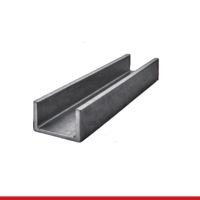
Stainless Steel Structural Channel is a corrosion-resistant load-bearing section engineered for structural reinforcement, heavy fabrication, and industrial framing systems. Designed with a precision U-shaped profile, stainless steel structural channel delivers excellent strength, dimensional stability, and uniform load distribution in both horizontal and vertical installations. Available in 304, 304L, 316, 316L, and Duplex 2205 grades, our stainless steel structural channels are manufactured in accordance with ASTM A276 and related specifications, ensuring controlled chemical composition, mechanical consistency, and long-term structural reliability across demanding environments.
Performance & Material Advantages
Our stainless steel structural channel provides an outstanding strength-to-weight ratio combined with superior corrosion resistance for industrial and architectural applications.
- 304 Stainless Steel Structural Channel – Suitable for general fabrication, infrastructure, and architectural frameworks.
- 316 Stainless Steel Structural Channel – Marine-grade performance with enhanced resistance to chlorides and corrosive chemicals.
- Duplex 2205 Structural Channel – Higher mechanical strength with excellent resistance to stress corrosion cracking in aggressive environments.
The open structural profile simplifies welding, drilling, machining, and bolted assembly integration. Available in hot-rolled and laser-fused configurations, stainless steel structural channels maintain tight dimensional tolerances, structural integrity, and long-term durability in moisture, marine, chemical, and heavy industrial applications.
Technical Specifications
Stainless Steel Structural Channel is manufactured in accordance with ASTM A276, ASTM A479, and EN 10088 standards, ensuring controlled chemical composition, mechanical consistency, and dimensional accuracy.
Available Grades:
- 304 / 304L(UNS S30400 / S30403) – General-purpose corrosion resistance and fabrication versatility.
- 316 / 316L(UNS S31600 / S31603) – Enhanced chloride resistance for marine and chemical environments.
- Duplex 2205(UNS S32205 / S31803) – Higher strength with superior resistance to stress corrosion cracking.
Industries Served
Stainless Steel Structural Channel is widely used in demanding structural and corrosion-resistant applications, including:
• Construction & Infrastructure Structural Framing
• Marine & Offshore Structures
• Oil & Gas Refineries & Processing Plants
• Chemical & Petrochemical Facilities
• Power Generation & Energy Plants
• Food Processing & Pharmaceutical Units
• Architectural & Commercial Frameworks
• Heavy Industrial Fabrication
System Integration
Stainless Steel Structural Channel integrates efficiently into industrial framing systems, fabrication assemblies, and engineered structural projects. Its precision U-profile supports seamless welding, bolting, and mechanical fastening across modular and custom-built structures. Compatible with CNC fabrication, laser cutting, and heavy structural installations, stainless steel structural channels ensure dimensional accuracy, load stability, and long-term performance in demanding industrial environments.